Back pain can come from muscle and joint strain, an irritated nerve, a fracture, infection, inflammation or a serious underlying disease, and those causes do not call for the same treatment. By the end, you will be able to recognise urgent warning signs, understand the assessment pathway, and judge when Ayurvedic care could support—not replace—medical treatment and active rehabilitation.
Key takeaways
- Mechanical back pain often changes with lifting, bending or posture.
- Numbness, progressive weakness or bladder changes require urgent medical assessment.
- Get a clinical assessment before choosing Ayurvedic treatment for back pain.
- Stop and reassess if pain worsens or mobility declines during a trial.
First identify what kind of back problem you may have
Pain that stays in the lower back, changes with lifting, bending or posture, and eases with rest is often mechanical back pain. It may come from muscles, joints, discs or ligaments, but it should not cause numbness, progressive weakness or loss of bladder control.
Nerve-related pain travels from the back into the buttock or leg and may feel burning, electric or tingling. Numbness, altered reflexes or weakness suggest nerve-root involvement. Spinal cord symptoms include worsening weakness in both legs, an unsteady gait, or new bladder and bowel changes.
Inflammatory back pain deserves a different assessment when stiffness lasts more than 30 minutes after waking, pain improves with movement rather than rest, or symptoms began unusually young and disturb sleep.
Use this checklist before choosing massage, yoga or Ayurvedic procedures alone:
- Seek prompt medical assessment for new bladder or bowel loss, saddle-area numbness, progressive leg weakness or difficulty walking.
- Seek urgent care after major trauma, especially with osteoporosis or long-term steroid use.
- Arrange medical review for fever, chills, unexplained weight loss, a history of cancer, or pain that is constant and unrelated to movement.
- Do not assume severe night pain, rapidly worsening symptoms or pain after a minor injury is ordinary muscle strain.
A clinician can then decide whether the pattern is uncomplicated musculoskeletal pain or needs neurological, inflammatory, fracture, infection or cancer evaluation. Massage-related relief does not prove that an underlying structural problem has been corrected.
These warning signs require medical assessment before Ayurvedic care
Seek urgent medical assessment rather than relying on massage, yoga or Ayurvedic procedures if you have cauda equina symptoms, major trauma, fever, or signs of serious illness. Delay can allow nerve damage, infection or a fracture to worsen.
| Warning sign | Why it matters | What to do |
|---|---|---|
| New bladder or bowel loss, or saddle numbness | Possible cauda equina compression | Go to an emergency department now |
| Progressive leg weakness or difficulty walking | Worsening nerve or spinal cord involvement | Seek urgent medical assessment |
| Back pain with fever, chills or severe illness | Possible spinal infection | Obtain same-day medical care |
| Major trauma, or pain with osteoporosis | Possible vertebral fracture | Seek prompt assessment; avoid forceful treatment |
| Unexplained weight loss or a history of cancer | Possible cancer-related spinal disease | Arrange urgent clinical evaluation |
Radiating leg pain, new numbness or persistent weakness also needs a neurological examination before treatment. Do not continue an Ayurvedic trial if pain increases, weakness or numbness appears, fever develops, or function declines.
A clinician should assess your reflexes, sensation, leg strength, gait and bladder or bowel symptoms. Use Ayurvedic care only after serious causes have been excluded, and tell the clinician or pharmacist about every Ayurvedic medicine, supplement and procedure you use.
What assessment should happen before treatment begins
Before any Ayurvedic procedure, a clinician or qualified practitioner should decide whether the pain is uncomplicated mechanical pain or needs medical investigation. The assessment starts with medical history: onset, injury, duration, pain pattern, radiation, fever, weight loss, previous cancer, osteoporosis, steroid use, and every medicine, supplement, or Ayurvedic preparation you take.
1. Perform a neurological examination. Check leg strength, reflexes, sensation, straight-leg raising, and symptoms suggesting nerve-root compression, such as radiating pain, numbness, or weakness.
2. Complete a gait assessment. Observe limping, foot drop, balance, coordination, and whether your walking pattern suggests nerve or spinal-cord involvement.
3. Record mobility checks. Measure bending, standing, walking distance, transfers, and the movements that trigger pain; these provide a baseline for judging whether treatment helps.
4. Examine the spine and surrounding muscles. Note tenderness, restricted movement, deformity, muscle spasm, hip findings, and signs that point toward inflammatory, fracture-related, infectious, or cancer-related pain.
Do not request imaging simply because back pain is present. An X-ray is appropriate after major trauma or when fracture, significant osteoporosis, deformity, or advanced structural change is suspected; it does not show nerves well.
An MRI is appropriate for progressive neurological loss, suspected spinal infection or cancer, possible spinal-cord or cauda equina compression, or persistent symptoms when the result will change treatment. A normal scan does not replace examination, and an incidental abnormality should not become the treatment target.
When Ayurvedic care may fit—and what it may involve
After serious causes and nerve-root symptoms have been assessed, Ayurvedic care can be considered as an adjunct for persistent nonspecific low-back pain, muscle tightness or recovery alongside prescribed treatment. It is not evidence that a disc, fracture or nerve compression has been corrected, and it should not replace exercise-based rehabilitation.
Choose the approach according to your limitation:
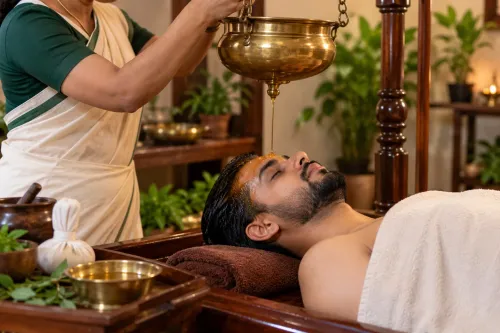
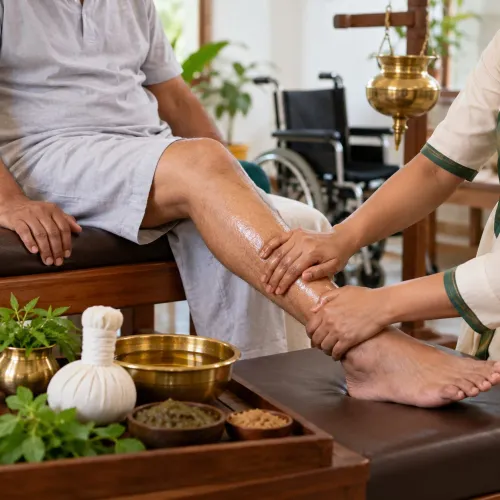
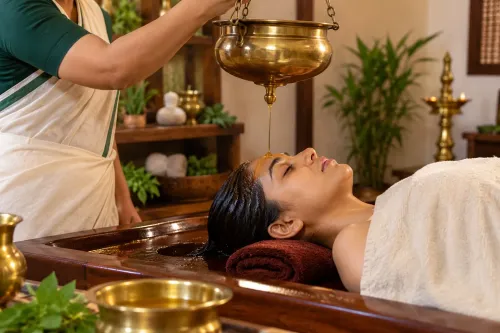
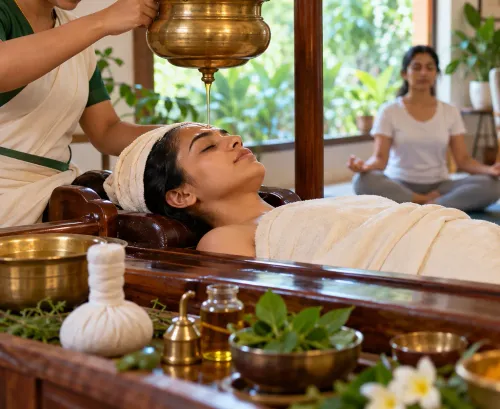
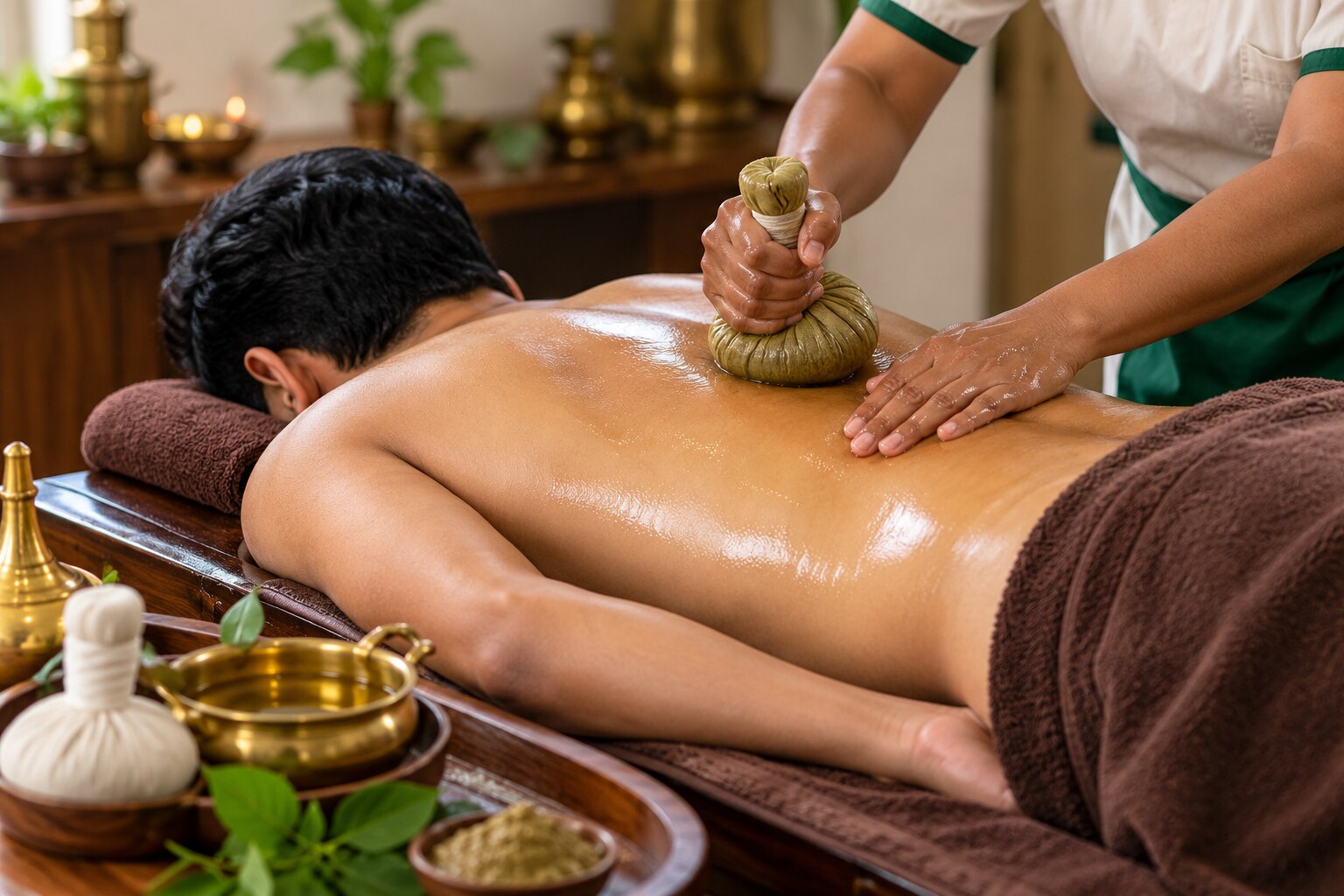
- Oil application may ease dry, guarded tissues and prepare you for movement; stop if it causes rash, burning or worsening pain.
- Ayurvedic massage may provide short-term relief when tight muscles limit mobility, but durable improvement in pain or disability remains uncertain.
- Heat therapy can reduce muscle guarding before gentle mobility work; avoid high heat over reduced sensation, open skin or acute swelling.
- Gentle, supervised yoga or stretching suits recovery support when movement improves without radiating pain. Avoid forceful twisting, deep forward bends and painful end-range positions.
Training labels do not replace clinical judgement. If you consult someone connected with Chakrapani Panchakarma Yoga Nisargopchar College, ask who assessed you, what practical supervision they received and how they refer people with numbness, weakness or worsening symptoms.
| Option | Best match | Boundary |
|---|---|---|
| Oil application | Stiff, guarded muscles | Not a structural treatment |
| Ayurvedic massage | Short-term comfort | Stop if leg symptoms increase |
| Heat therapy | Pre-movement relaxation | Prevent burns |
| Gentle mobility | Recovery and function | Progress without provoking pain |
How to judge benefit, safety and the limits of a trial
Set a defined trial before you begin: name the target, such as walking farther or standing through a work shift; record baseline pain, sleep and function; and agree on the number of sessions and review date. Improvement means better activity, not only temporary relief after treatment.
| Option | What it offers | Main limit or safety point |
|---|---|---|
| Supervised movement | Builds strength, mobility and confidence | Progress gradually; pain alone is not the only measure |
| Gentle yoga | May provide small gains in chronic pain and function | Avoid forceful twisting, end-range flexion and pain-provoking poses |
| Supportive symptom management | Heat, pacing or short-term medicines can ease activity | Relief does not prove the underlying problem is resolved |
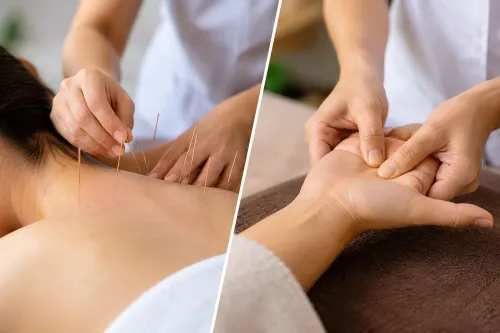
| Manual therapy | Massage or manipulation may help selected people | Use it with exercise, not as repeated passive treatment alone |
| Oral Ayurvedic medicines or procedures | May complement care after assessment | Check ingredients, contamination, interactions and delayed diagnosis with a physician or pharmacist |
Compare each option against the same measures at review: walking distance, dressing, bending, sleep, work or household tasks, pain intensity and any new symptoms. Ayurvedic care has not been established as superior to exercise or other recommended approaches, so do not postpone conventional assessment or treatment.
Stop the trial and seek reassessment if pain steadily increases, weakness or numbness appears, or progress is absent by the agreed review date. Escalate promptly for bladder or bowel disturbance, saddle numbness, fever, unexplained weight loss or worsening neurological function.
Frequently asked questions
What kind of back problem may suit Ayurvedic care?
Ayurvedic care may be considered for mechanical back pain that changes with lifting, bending or posture and lacks neurological warning signs.
Which back-pain symptoms require medical assessment first?
Seek medical assessment for numbness, progressive weakness, loss of bladder control or other symptoms that suggest nerve or serious spinal involvement.
What assessment should happen before Ayurvedic treatment begins?
A clinician should review your symptoms, movement limits, medical history and neurological signs before treatment begins, then decide whether further testing or referral is needed.
How can you judge whether an Ayurvedic treatment trial is helping?
Track pain, walking, bending, sleep and daily activities, and stop for reassessment if symptoms worsen or new neurological signs appear.